

First Looks & Favorites from the Permanent Collection brings together works that span centuries and cultures, placing recent acquisitions and newly exhibited works in direct conversation with longstanding highlights from the Muscarelle Museum of Art’s permanent collection.
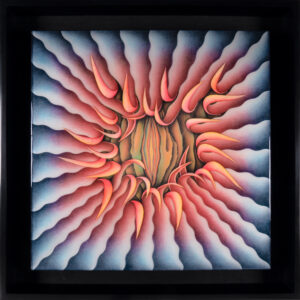
Among the works on view for the very first time is Judy Chicago’s Peeling Back (1974/2021), a recent acquisition that adds to the museum’s growing collection of modern and contemporary works. A central figure in feminist art, Chicago has consistently challenged the structures that have historically limited women’s roles within artistic production. In Peeling Back, a radiant circular form expands outward in layered bands of color, transforming abstraction into a creative force. The piece’s reworking across decades highlights the continued relevance of Chicago’s work and her place within contemporary art discourse.
JUDY CHICAGO | American b. 1939 | Peeling Back, 1974/2021 | Mixed media on panel | © Judy Chicago/Artists Rights Society (ARS), New York | Acquired with funds from the Board of Visitors Muscarelle Museum of Art Endowment | 2024.060
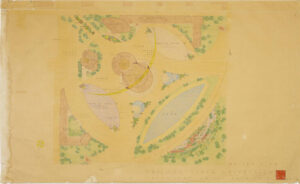
In a different context, Frank Lloyd Wright’s architectural presentation drawing for the Fine Arts Center at Arizona State University, Tempe (c. 1959) expands the scope of the exhibition beyond painting and printmaking. Created near the end of Wright’s career, the drawing outlines a large-scale vision for an integrated arts complex. Though only partially realized, the proposal reflects Wright’s concept of “organic architecture,” emphasizing the relationship between built environments and human experience. As a newly exhibited work, it offers insight into the museum’s growing holdings in architecture and design.
FRANK LLOYD WRIGHT | American, 1887-1959 | Architectural Presentation Drawing for the Fine Arts Center, Arizona State University, Tempe, circa 1959 | Colored pencil and ink on paper | Acquired with funds from the Board of Visitors Muscarelle Museum of Art Endowment | 2024.057
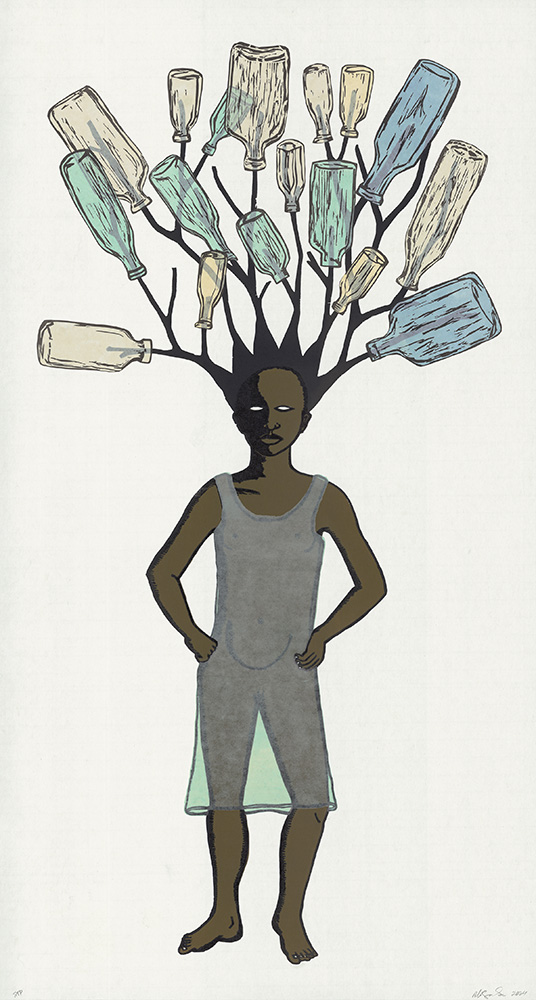
Also newly on view is Alison Saar’s Li’l Big Sister (2024), a recent acquisition that foregrounds themes of memory, heritage, and resilience. Saar depicts a young girl whose branch-like hair forms a protective bottle tree, drawing on traditions rooted in African, Caribbean, and Creole cultures. Created through a combination of woodcut, linocut, dye, shellac, and collage, the work reflects Saar’s layered approach to both process and subject matter. The figure embodies a tension between childhood and responsibility, situating personal narrative within broader cultural histories.
ALISON SAAR | American, b. 1956 | Li’l Big Sister, 2024 | Woodcut, linoleum cut, dye, shellac and collage on Kozo and Rives BFK | © Alison Saar | Museum purchase with funds provided by Ann ’66 and Steve Critchfield | 2025.002
■ Emma Anderson ’26, Marketing & Events Intern