

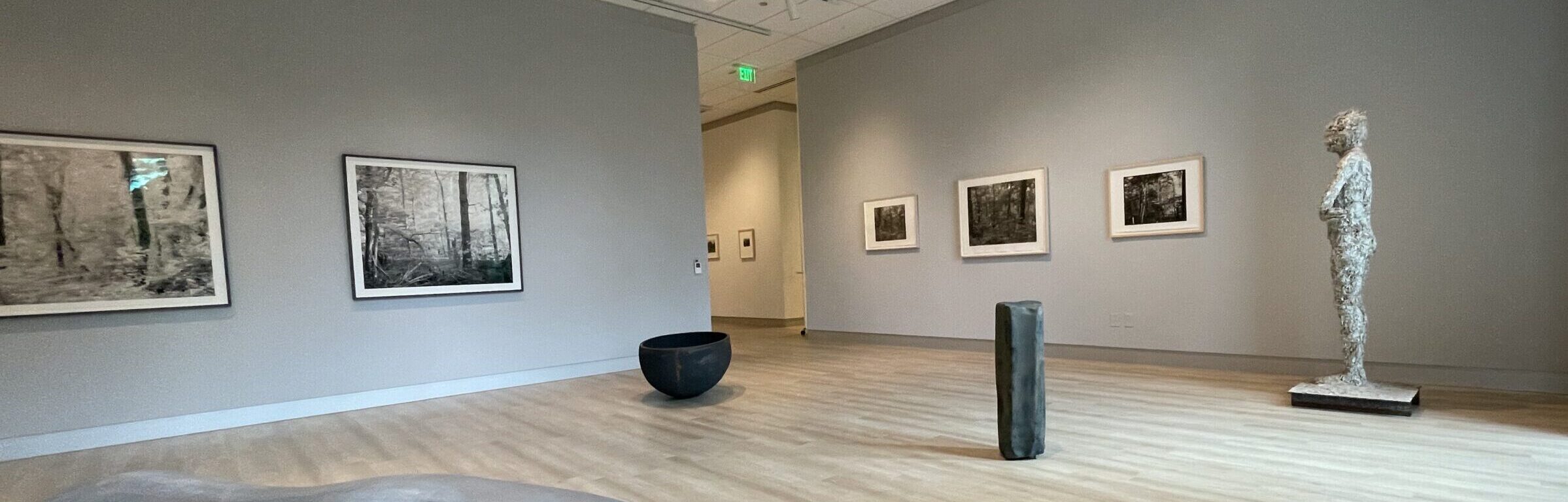
This spring, William & Mary students participated in Neuro-Aesthetics: The Artist & the Mind, a course co-taught by Associate Professor of Psychological Sciences Jennifer Stevens and Professor of Art Elizabeth Mead. Students split their time evenly between art creation in the studio and research in the Muscarelle Museum of Art, utilizing two exhibitions, James Sullivan: Thinking Sculpture | Sculpture Thinking and Abstract Expressionists: The Women to conduct neuroaesthetics research.
Questions of aesthetics have sought to understand what defines beauty and art for centuries. From demonstrated skill and materials used to subject matter and historical relevancy, certain works of art are collectively understood as significant contributions to the art world. Curators and collectors influence public perceptions and art exposure, reinforcing an intangible system of value by exhibiting works that may align with aesthetic societal preferences. “What we have found,” explains Stevens, “is that art is good for your health. Patients
are less agitated and heal more quickly when their surroundings include art, nature and architecture.
In the newly emerging field of neuroaesthetics, researchers seek to measure the impact of something as subjective as art.
“Neuroaesthetics is a developing interdisciplinary field that seeks to understand how aspects of beauty — including art, theatre, music, design and architecture — impact the mind, brain and body,” says Stevens. In this emerging field, variables such as personal preferences, life experiences, cultural frameworks and familiarity are examined through the study of cognitive, neural and behavioral responses to aesthetic experiences. In short, researchers ask: what exactly does the brain do when experiencing art?
“If we are to measure neural or physiological shifts as a function of art exposure, the study of aesthetics turns into the field of neuroaesthetics,” says Stevens. “The field examines how we evaluate the meaning and value of creative works by measuring physiological shifts that accompany these behaviors, experiences and processes.”
The field of neuroaesthetics has been gaining traction as definitions and parameters are introduced in the scientific community. As an emerging field of study, “the biggest challenge is identifying the language, understanding how to quantify the impact of something as qualitative as art, and measuring its impact,” adds Stevens.
Although methods of study are still in development, it is widely accepted that art is good for your health. In a recent book, Art Cure: The Science of How the Arts Transform Our Health, psychobiologist Daisy Fancourt elevates the importance of the arts, positing that they are the forgotten fifth pillar of health, alongside sleep, exercise, diet and nature.
The bestseller has launched the subject into the national conversation, but it’s been a topic of study at William & Mary for more than a decade.
The university offered the first undergraduate course in the country on neuroaesthetics, Perception and Representation in Art & Architecture, in the summer of 2011. Since the inception of undergraduate neuroaesthetics courses, the Muscarelle has been a vital resource for students to learn, research and engage directly with art exhibitions
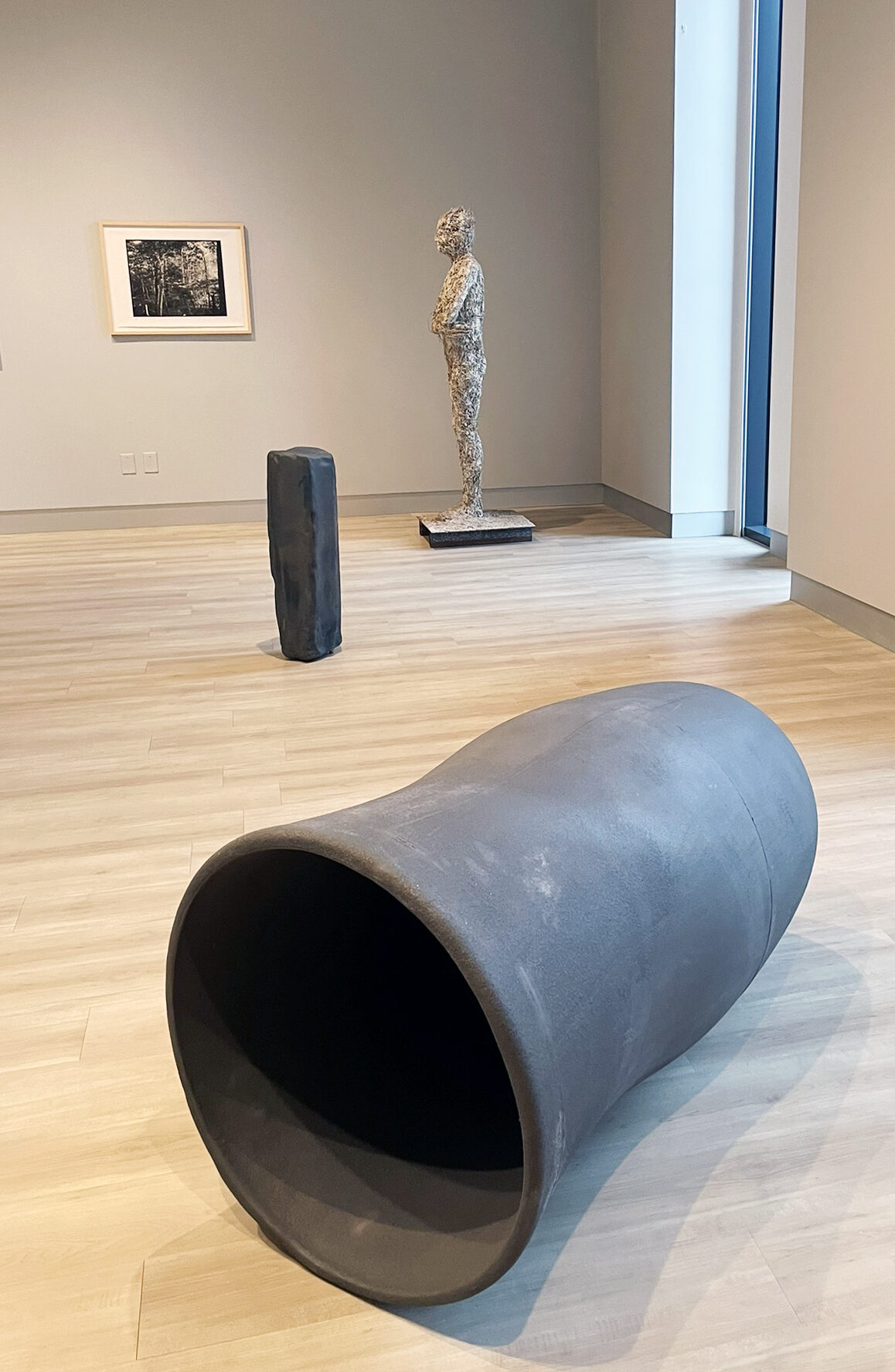
This semester, students split into three study groups to work on different questions related to the impact of the exhibitions on visitors. Study One examined the effects of art viewing duration on anxiety and memory in the galleries hosting the James Sullivan exhibition, which presented contemporary works in a range of media . After working with four groups, students concluded that “even brief engagement with art may reduce state anxiety, although longer exposure did not enhance this effect.”
Students in Study Two examined the impact of abstract and figurative art styles on descriptive word association, while Study Three looked at perceived self-relevance in the works of James Sullivan, posing the question: “what makes some works of art more impactful to us than others?”
James Sullivan: Thinking Sculpture | Sculpture Thinking was curated by Mead to serve as a learning laboratory for students, demonstrating how the experiential value of an object can be enhanced by placing it in conversation with others around it.
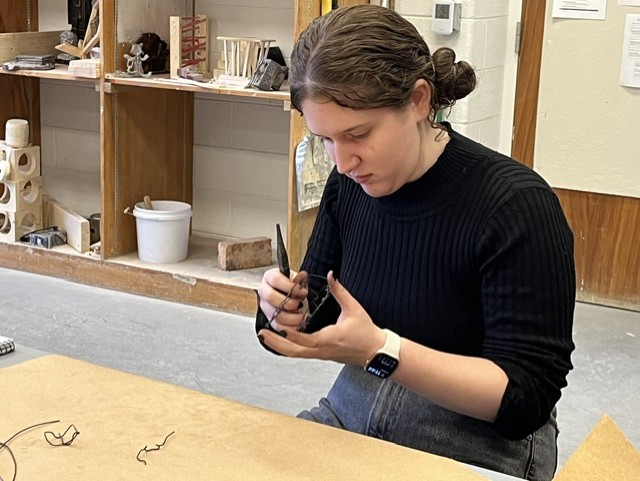
In the studio, students spoke with the artist about his artistic process and created their own sculptures in response, focusing on the manners in which form constructs a visual language. “Good art establishes a conversation between the work and the beholder that sustains itself over a lifetime of looking and experiencing,” explains Professor Mead. “It is not a matter of looking and determining a finite response as much as it is an unfolding.”
The next installment of the course will be taught in Spring 2028.
■ Holly Gardner, Education Coordinator